
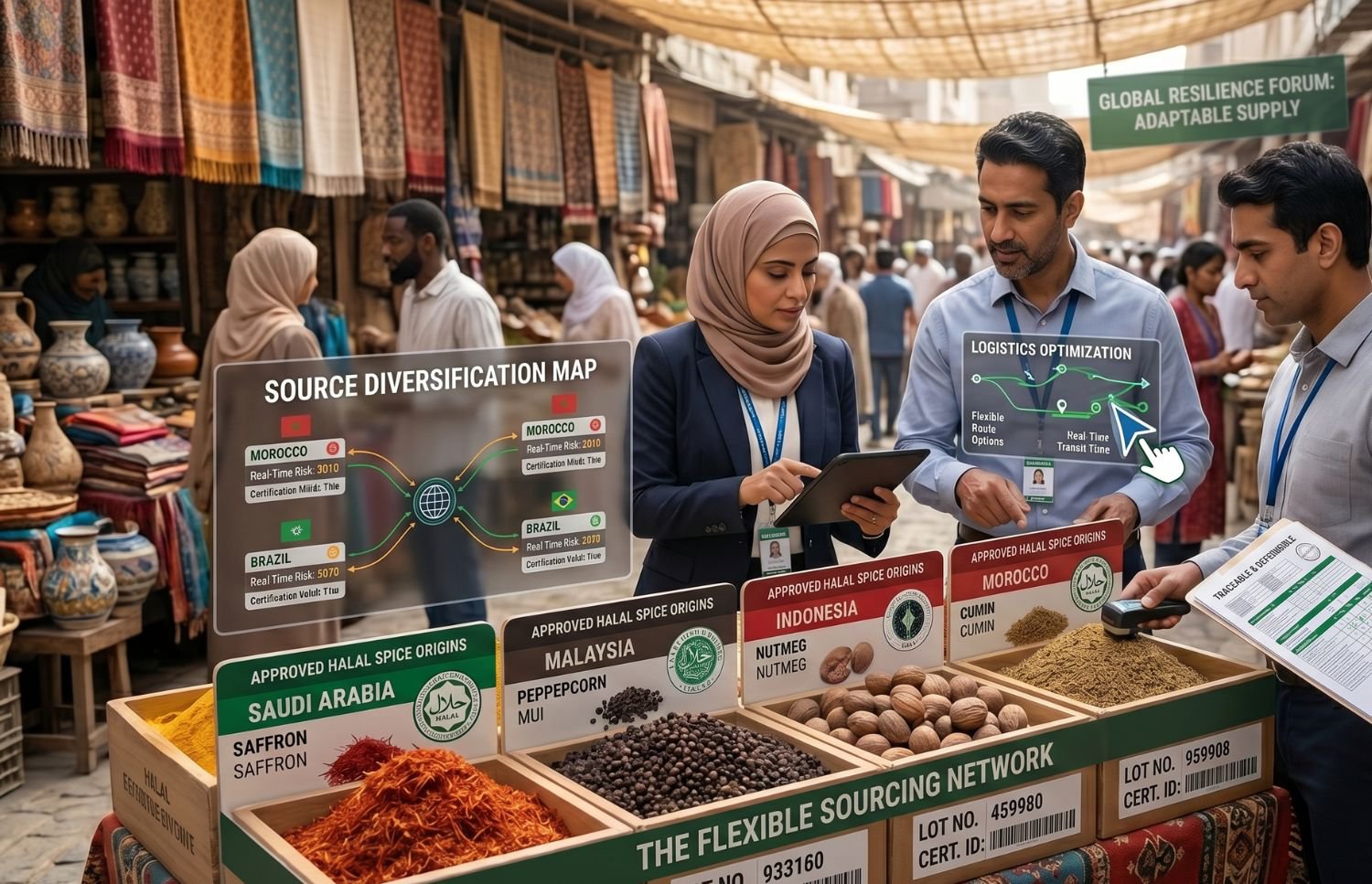
Manufacturing systems continue to depend on halal ingredient sourcing to keep products aligned with regulatory and certification requirements across markets. At the same time, procurement teams are dealing with more variability in supplier performance and availability. Demand across food, pharmaceutical, and personal care sectors is also shaping how sourcing decisions are structured.
In practice, alignment between compliance expectations and day-to-day sourcing is not always straightforward. Teams need to manage documentation, supplier approvals, and shifting supply conditions at the same time. Because of this, flexibility has become a practical requirement rather than a planning preference.
Strategic Drivers Behind Halal Ingredient Sourcing Flexibility
Supply chain disruption has increased concentration risk visibility across procurement functions. Many teams now map supplier exposure more closely than in previous years. This directly affects how halal ingredient sourcing programs are structured and maintained. World Bank research on food supply chain resilience notes that ongoing logistics disruptions and connectivity gaps continue to create uncertainty in agricultural input flows, reinforcing the need for more distributed and transparent sourcing structures.
Interruptions in transport, raw material availability, and supplier operations have shown how quickly sourcing assumptions can change. In response, organizations are keeping more than one approved option available for key inputs. This helps reduce dependency on a single supply route or supplier relationship.

Risk evaluation is also becoming more detailed, especially around certification status and documentation reliability. Instead of treating approval as a one-time step, companies are reviewing supplier consistency over time. This adds more structure to how sourcing decisions are made.
In most cases, flexibility is now built into the sourcing model itself. It is not treated as a backup plan but as part of normal procurement design. That shift helps reduce delays when conditions change unexpectedly.
Supplier Diversification and Approval Pathways
Supplier diversification is used to avoid overreliance on individual suppliers for critical ingredients. Approval pathways ensure that each supplier meets certification and documentation requirements before being added to procurement systems. In halal ingredient sourcing, this balance between variety and control is important for stability.
- Qualification of suppliers based on certification scope and product fit
- Secondary suppliers maintained for continuity during disruption events
- Cross-checking ingredient specifications across approved sources
- Regular review of supplier documentation and compliance status
- Regional sourcing options included where standards remain consistent
Diversification is usually managed through internal quality and procurement coordination. Once a supplier is approved, it is added into controlled purchasing systems with defined limits. This helps maintain traceability while still allowing sourcing flexibility.
Suppliers are not treated as permanent approvals without review. Many organizations reassess them when something changes, such as certification updates or production shifts. That ongoing review keeps the system reliable over time.
Contingency Planning in Sourcing Systems
Contingency planning is used to keep production running when sourcing conditions shift unexpectedly. This often involves identifying alternative suppliers before they are actually needed. In halal ingredient sourcing systems, those alternatives must already meet certification requirements. FAO’s State of Food and Agriculture report highlights that agrifood systems remain exposed to shocks, reinforcing the need for pre-planned resilience and verified alternative sourcing pathways.

- Identification of ingredients that require backup sourcing options
- Maintenance of pre-approved alternative supplier lists
- Clear substitution rules for allowable ingredient changes
- Assessment of supplier risk based on location and logistics
- Integration of contingency steps into procurement procedures
These plans are typically developed with input from procurement and quality teams. Each scenario is reviewed based on how it would affect production and compliance. That helps avoid rushed decisions during disruptions.
Some companies also hold limited buffer inventory for higher-risk materials. However, storage limitations and shelf-life rules often restrict how much can be kept. As a result, planning is usually more important than stockpiling.
Documentation Control in Halal Ingredient Sourcing and Alternative Reviews
Documentation is what keeps sourcing decisions traceable and defensible during audits. It connects supplier approval, ingredient specifications, and production records in one system. In halal ingredient sourcing, this becomes especially important when changes are introduced.
- Verification of supplier certification before purchasing decisions
- Review of ingredient specifications before any substitution
- Traceability records linking raw materials to finished goods
- Change control documentation for any sourcing updates
- Retention of audit records for compliance verification
Most documentation checks happen before a change is approved. That prevents issues from entering production without review. QA teams usually work closely with procurement during this stage.
When changes do occur, they are recorded with clear justification and approval history. This makes it easier to explain decisions during audits or internal reviews. It also helps maintain consistency across different production sites.
Continuity Through Structured Sourcing Design
Sourcing systems work best when they are designed with both control and flexibility in mind. Most manufacturers now operate in environments where supply conditions can shift without much warning. That makes structured planning more important than reactive decision-making.
Halal ingredient sourcing performs better when supported by clear supplier oversight, documentation discipline, and practical contingency planning. Halal Transactions of Omaha helps manufacturers develop halal ingredient sourcing programs that balance compliance requirements with operational flexibility. Our work across different production environments supports sourcing systems that remain stable while adapting to real supply chain conditions.


Comments are closed