

Modern food manufacturing relies on structured management frameworks to maintain product quality and consumer health. Effective food safety systems provide the operational foundation needed to prevent physical, chemical, and biological hazards. Growing international demand for certified products creates additional operational challenges for global processing facilities.
Maintaining compliance across complex manufacturing environments requires precise coordination between operational teams and management. Enterprise processing protocols can support certified production runs without disrupting daily workflow efficiencies. Aligning quality monitoring with specialized market standards strengthens facility control and maintains consistent production practices.
Operational Synergies Between Food Safety Systems and Halal Protocols
Commercial facilities use systematic monitoring frameworks to prevent cross-contamination across complex processing lines. For instance, standard food safety systems establish critical control points to monitor ingredient hazards during active production. Shared operational protocols allow processing plants to manage sanitation schedules and material separation simultaneously.
Combining food safety and halal checks into one audit simplifies verification for quality assurance departments. Adopting integrated management systems can reduce audit time and streamline compliance checks across manufacturing operations. Facilities running certified shifts can build on existing hazard controls, since halal requirements complement HACCP systems.
Proactive material control ensures uncertified substances never contact approved product lines during processing. Processors must establish physical separation protocols to preserve product integrity during continuous manufacturing cycles. Rigorous equipment sanitation procedures also protect finished goods from inadvertent cross-contact hazards during shifts.
Structured corrective action plans enable production supervisors to address operational deviations before distribution occurs. Modern processing facilities track batch records to verify compliant raw material movements. Halal Transactions of Omaha helps manufacturers structure documentation workflows that satisfy dual regulatory expectations.
Managing Sourcing Controls Within Food Safety Systems
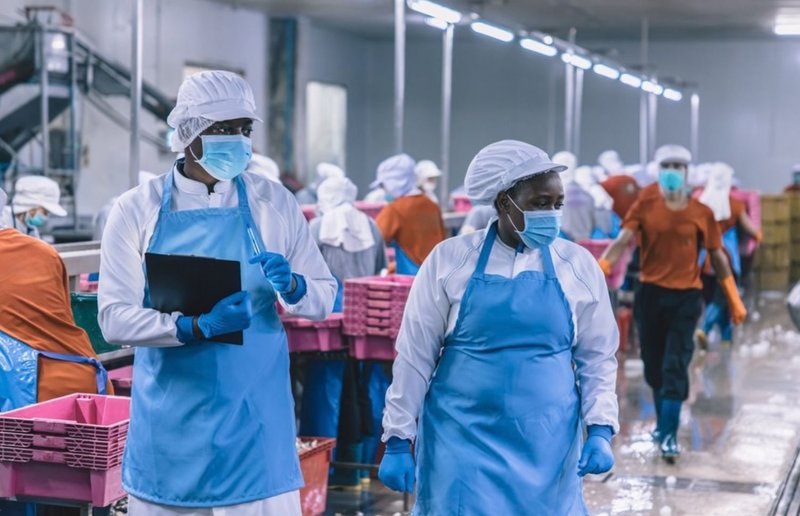
Supplier verification remains essential for controlling raw material safety and specialized product compliance. Manufacturing teams audit raw ingredient vendors to ensure supply chain integrity. Evaluating ingredient documentation within food safety systems helps mitigate downstream risks across processing facilities.
Quality assurance departments implement structured receiving procedures to maintain rigorous raw material control:
- Establishing approved vendor lists based on audited technical documentation and active supplier certification.
- Verifying functional processing aids, sub-ingredients, and carrier solvents before facility entry clearance.
- Physically segregating incoming raw materials inside temperature-controlled storage warehouses to prevent cross-contact.
- Conducting routine lot-level raw material testing to confirm physical and chemical purity standards.
- Maintaining complete digital receiving logs linking supplier lot codes directly to finished production runs.
Managing supplier data through single digital repositories speeds up enterprise quality review workflows. Robust receiving inspection protocols within food safety systems help prevent unauthorized materials from entering processing lines.
Equipment Sanitation and Cross-Contact Prevention Practices
Sanitation standard operating procedures form the backbone of modern commercial plant hygiene. Cleaning protocols remove biological residues and chemical contaminants between operational manufacturing shifts. Validated food safety systems guarantee that equipment surfaces meet strict cleanliness benchmarks.
Production schedulers organize processing runs to minimize equipment washdown downtime and complexity. Dedicated manufacturing equipment eliminates potential cross-contact vectors during specialized high-risk processing runs. Visual inspections and surface testing confirm cleanliness before line startup clearance occurs.
Chemical selection for plant washdowns requires review to maintain standard compliance profiles. Cleaning agents must remove organic soils without leaving toxic chemical residues behind. Standardized sanitation workflows within food safety systems protect consumers while preserving operational continuity.
Operational signage guides plant employees during full line turnover and deep-cleaning procedures. Trained sanitation crews execute validated cleaning sequences to eliminate subtle cross-contamination hazards. Maintaining clean processing environments preserves finished product marketability across diverse global consumer bases.
Maintaining Documentation in Food Safety Systems
Comprehensive record-keeping proves that manufacturing lines maintain continuous operational control during production. Enterprise quality protocols within food safety systems require detailed logs covering processing parameters. Systematic documentation practice simplifies third-party auditing processes while reinforcing internal quality assurance standards.
Manufacturing facilities utilize standardized logs to record continuous compliance across active commercial processing runs:
- Digital lot tracking systems capture continuous operational data throughout active manufacturing processes.
- Verification logs confirm that equipment sanitation occurred prior to specialized production run starts.
- Corrective action records detail immediate operational adjustments made during observed processing deviations.
- Internal audit reports document routine management reviews of facility line segregation protocols.
- Training logs record employee completion of specialized sanitation and ingredient control learning modules.
Standardizing record formats across all manufacturing departments eliminates administrative confusion during facility inspections. Beyond this, digitized record-keeping within food safety systems allows quality managers to retrieve production logs within minutes.

Comprehensive Quality Integration and Verification Strategies
Integrating specialized standards into broader quality management frameworks creates resilient production operations. Processors with validated food safety systems have the infrastructure needed for advanced certification. Growing demand for halal-certified U.S. products gives food manufacturers room to increase international market access.
Coordinating multiple compliance programs helps prevent conflicts between plant hygiene and product standards. Cross-training quality personnel supports consistent monitoring across daily manufacturing and packaging activities. Halal Transactions of Omaha assists commercial processors through technical reviews and process assessments.
Federal rules require facilities to reanalyze their food safety plans at least once every three years. These periodic reviews help quality teams identify gaps between existing protocols and specialized requirements. Facility management also helps minimize disruptions during high-volume commercial production runs.
Continuous process evaluation allows enterprise quality systems to evolve alongside modern food technologies. Facilities that prioritize comprehensive compliance management build foundations for long-term commercial success. Harmonizing plant controls helps processing plants serve diverse global consumer markets.
Practical Alignment Through Halal Transactions of Omaha
Robust food safety systems establish operational structures necessary to manage documented manufacturing controls. Facility controls, raw material tracking, and equipment sanitation create strong foundations for specialty production. Aligning factory workflows with specialized market expectations ensures total product integrity across distribution networks.
Halal Transactions of Omaha provides technical consulting to integrate Halal standards into food safety systems. Their technical understanding helps food manufacturers implement practical quality programs alongside established processing controls. Qualified processors seeking expanded global market access can connect with Halal Transactions of Omaha.


No responses yet